

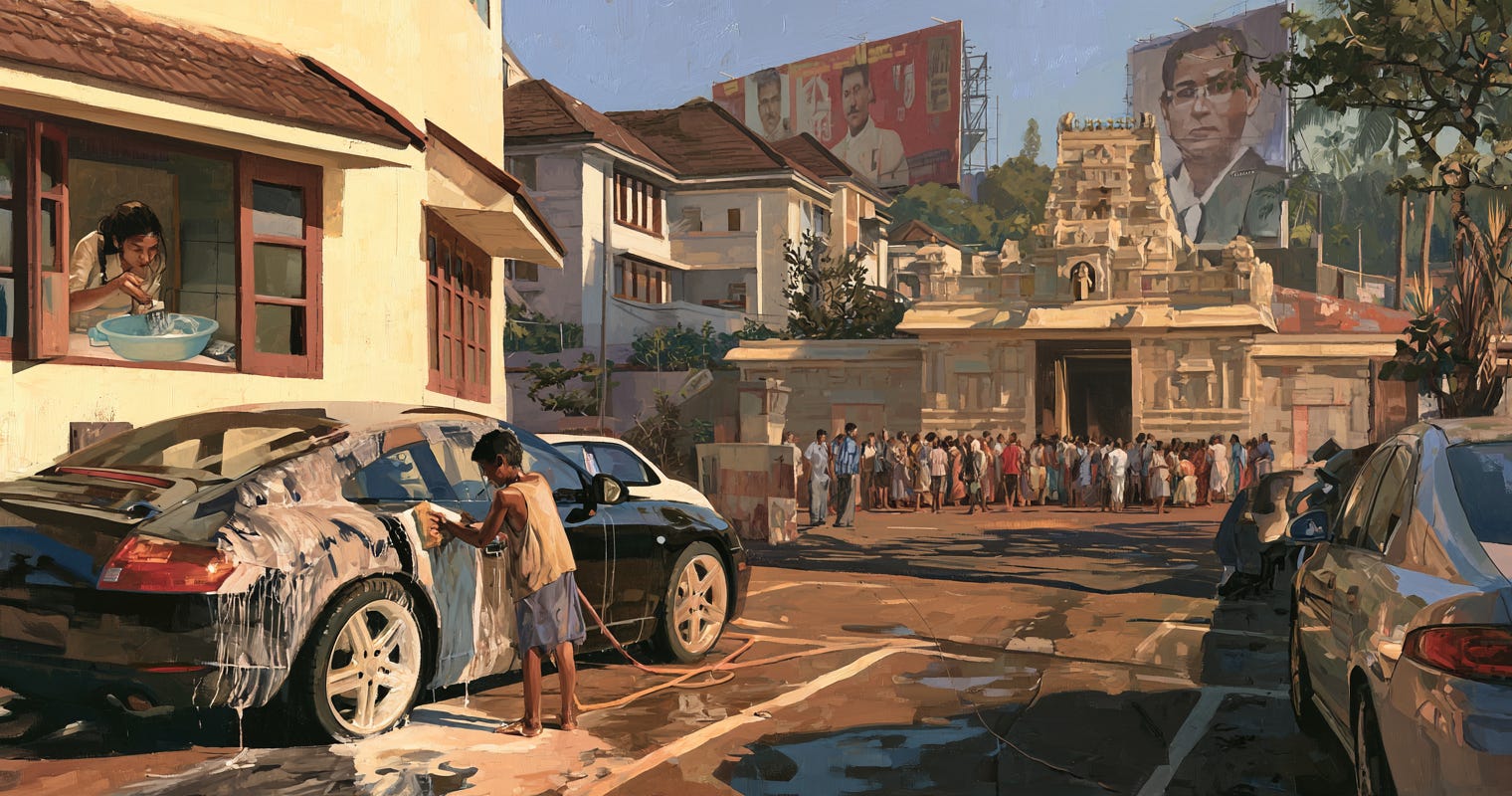
There’s rarely any issue in the Indian socioeconomic system that doesn’t find its roots in the exponentially growing population. From overpopulation in cities to the unending queues in the job markets, to public spaces slowly turning into settlements… Name a socioeconomic problem and it finds its roots in the population bubble that is waiting to burst.
For years the politically suitable and socially acceptable version was that this was a Demographic Dividend. Now more people, especially from the emerging middle class are calling it a Population Bomb.
The Hudson Institute and Azim Premji University’s State of Working India reports how the same young population is becoming a potential demographic disaster if skills and jobs fail to reach them at the right stage of their lives. And you can see that already around you. Youth form the large majority of the unemployed or even unskilled population in a developing country like India.
This multiplication continues most visibly among the less educated and poorer sections of society. Uninterrupted, uncontrolled, and unattended. Not because no one can see it, but because this very problem is a much-needed asset for many.
NFHS-5 data shows that women in the lowest wealth strata have 2.6 children on average, while those in the highest have 1.6. Women who never saw the gate of a school average 2.8 children while those with twelve or more years of schooling average 1.8.
The gap has narrowed over decades, but it is still too bad to ignore. The people with the least education and the least money continue to have more children than those who can actually afford them.
The population of the poor is the reason rich people can live like rich people.
Who else would stand as a security guard in a housing society through an Indian summer for ₹15000 a month? Who else would work as a housemaid for a monthly salary that’s less than the cost of a weekend hangout of their bosses? If not they, who would be the “Chotu” serving tea at a roadside stall or washing cars in the parking lot?
ILO data shows domestic workers in India earn roughly half what other employees earn. PLFS and NITI Aayog analyses put informal employment at 85–90 percent of the workforce. Services and domestic work function as a low-wage trap that keeps the arrangement intact. A large pool of people with few options is what makes the cheap labour reliable.
The same population keeps the political system running. It thrives on votes that can be purchased with low-quality ration, free bus tickets, free LPG cylinders, and the promise of cash every month. These benefits do not eliminate the open gutter outside the house or create jobs, but that’s hardly an issue for voters coming from that strata.
CSDS-Lokniti post-poll surveys across multiple elections show that beneficiaries of such “public welfare schemes” are measurably more likely to support the ruling party than voting for change. As Yamini Aiyar noted, they are no longer citizens or voters but “labharthi” whose political loyalty is tied to these benefits.
The same people treat politicians like kings and queens. Decades of folding hands and bowing down have left large sections of the electorate behaving as if they’re not in a democracy in a liberal form of monarchy. Thousands of voters have reduced themselves to a head count that can be moved.
Dangle some money and they will attend a rally in heat that no one with a sane mind would step into. Add samosa and chai and the slogans become louder. Politicians do not need to win a crowd. They can buy one.
And let’s not forget the most important “use”. The sons of poor labourers become fiercer warriors of religion than the sons of businessmen sitting in bungalows.
The system needs young men with sticks and torches who will beat people and set places on fire in the name of protecting the almighty (who by the way is supposed to protect the weak humankind). Waiting in queues for hours, dying in a stampede, or creating a ruckus in the name of devotion — these are roles affluent people do not perform.
2002 Ahmedabad violence showcased how young men from de-industrialised areas were recruited as “foot soldiers,” with material inducements and promises of protection. The groups involved in moral policing commonly include many of the young unemployed and less educated men. Academic studies like one of Paul Brass’s long-term work, show that local toughs and underemployed youth form a readily available pool once political entrepreneurs decide to mobilise.
The poverty of the large section of society is how the selected few get benefited, in every visible sense. They do not make them feel poor. They make them feel proud.
An unemployed boy in his twenties is made to ignore worldly things like a job and dedicate his life to a greater cause of saving the culture. A teenage girl is not encouraged to study but rather be a good househelp so she is not a burden on the family. A man struggling to feed his family is patted on his back when he brings fifty unemployed youngsters for a politician’s roadshow.
The illusion of being valuable is what keeps them from asking questions, demanding rights, and looking for things like education, health, jobs. And that my friend, is a great dance of democracy our country witnesses every single day.